5 Pro Tips How to Spray Neem Oil
Aphids cluster beneath tender leaves, their sap-sucking mouthparts drawing life from your tomatoes while whiteflies spiral upward in a pale cloud at the slightest touch. Learning how to spray neem oil correctly transforms this botanical extract from a well-intentioned gesture into a precision tool that disrupts insect molting hormones, suffocates soft-bodied pests, and interrupts fungal spore germination without compromising beneficial predator populations or soil microbial communities.
Materials

Cold-pressed neem oil (Azadirachta indica) with minimum 70% azadirachtin concentration serves as the active foundation. Select formulations labeled for foliar application rather than soil drenches. You will need a pump sprayer with adjustable nozzle (1-2 gallon capacity), liquid castile soap or horticultural emulsifier (pH 7-8), and filtered water with neutral pH between 6.5-7.0. Hard water above pH 7.5 reduces emulsion stability and causes the oil to separate prematurely.
Combine 2 tablespoons of neem oil with 1 teaspoon of emulsifier per gallon of water. The soap molecules create micelles that suspend oil particles in aqueous solution, preventing separation and ensuring even coverage. Mix in a separate container before adding to the sprayer tank. Organic kelp meal (1-0.1-2 NPK) or fish hydrolysate (5-1-1 NPK) can be tank-mixed at half-strength to provide foliar nutrition during pest management cycles, though this increases cation exchange activity on leaf surfaces and may attract secondary pests if not rinsed within 72 hours.
Timing
Apply neem oil when temperatures range between 55-85°F. Above 90°F, the oil can cause phytotoxic burn as stomata close and prevent evaporative cooling. Below 50°F, emulsion viscosity increases and spray droplets fail to spread across cuticle wax layers. In USDA Hardiness Zones 3-6, schedule applications between May 15 and September 15, after final frost dates and before nighttime temperatures drop below 45°F. Zones 7-9 permit year-round use except during summer peaks above 95°F, typically July 15 through August 20. Zone 10-11 gardeners should spray during dry seasons when humidity drops below 60%, as excessive moisture accelerates oil rancidity and promotes secondary fungal infections.
Spray during early morning hours between 6-9 AM or late evening after 6 PM when pollinators are inactive and UV radiation is minimal. Direct sunlight degrades azadirachtin within 90 minutes, reducing efficacy by up to 70%. Reapply every 7-14 days depending on pest pressure and rainfall. Rain within 3 hours of application washes away the oil film before it adheres to the cuticle layer.
Phases

Sowing Phase: Avoid spraying seedlings until the second true leaf stage. Cotyledons lack the cuticle thickness to tolerate oil films, and premature application blocks gas exchange through immature stomata. Once seedlings develop 4-6 true leaves (typically 14-21 days post-emergence), begin preventive applications at half-strength: 1 tablespoon per gallon. Target the underside of leaves where aphids and thrips colonize along midribs.
Pro-Tip: Inoculate root zones with Trichoderma harzianum at transplanting. This fungal symbiont colonizes root surfaces and produces chitinase enzymes that degrade insect exoskeletons, creating a systemic defense that complements foliar neem applications.
Transplanting Phase: Spray 24 hours before moving plants to reduce transplant shock and deter immediate pest colonization. Neem oil contains salannin compounds that act as antifeedants, causing insects to reject treated foliage even when azadirachtin levels are sub-lethal. Apply full-strength solution (2 tablespoons per gallon) to both sides of all leaves, ensuring runoff reaches the soil line where fungus gnat larvae and root aphids congregate.
Pro-Tip: Prune lower leaves at a 45-degree angle 1 inch above the node before spraying. This improves air circulation, reduces humidity-related mildew, and concentrates auxin distribution toward terminal growth where flowering and fruiting occur.
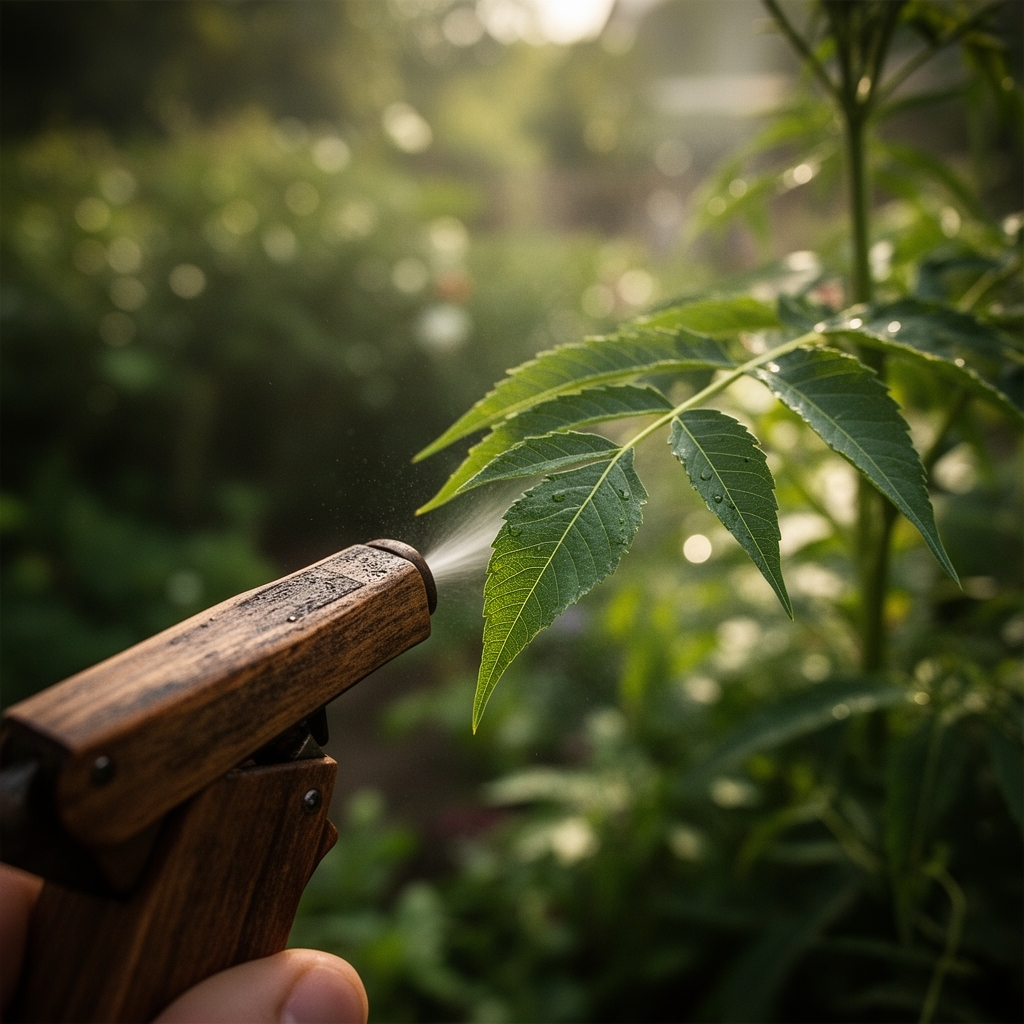
Establishing Phase: Mature plants require thorough coverage including stem crevices, leaf axils, and flower buds. Use a fine mist setting (droplets 50-100 microns) to penetrate dense canopy layers. Rotate spray angles to reach all surfaces: overhead at 90 degrees, lateral at 45 degrees, and upward from below at 30 degrees. Each plant should receive coverage until the point of drip, approximately 2-4 ounces per square foot of canopy.
Pro-Tip: Add 1 tablespoon of aloe vera gel per gallon to the spray mixture. The polysaccharides in aloe improve droplet adhesion and act as a spreader-sticker, extending residual activity from 7 days to 12 days between applications.
Troubleshooting
Symptom: Yellow stippling on upper leaf surfaces with fine webbing underneath. Solution: Spider mites have developed tolerance. Increase spray frequency to every 5 days and add 1 teaspoon of rosemary oil per gallon to disrupt mite pheromone communication.
Symptom: Leaf curl and distortion without visible pests. Solution: Residual oil has accumulated in growth points, blocking auxin transport. Flush foliage with plain water and suspend neem applications for 14 days. Resume at half-strength.
Symptom: White powdery residue on leaves after spraying. Solution: Hard water minerals have precipitated. Switch to distilled or rainwater, or acidify with 1 teaspoon of citric acid per gallon to reach pH 6.5.
Symptom: Pests return within 3 days of application. Solution: Spray timing coincided with egg hatch but missed adult population. Stagger applications every 4 days for three consecutive treatments to break reproductive cycles.
Maintenance
Water plants 6-8 hours before spraying to ensure turgid cell walls that resist phytotoxicity. Maintain soil moisture at 1 inch per week through drip irrigation to prevent drought stress that thins cuticle layers. Clean sprayer nozzles with isopropyl alcohol after each use to prevent oil rancidity and bacterial biofilm formation. Store mixed solutions for no more than 8 hours; azadirachtin degrades 30% within 24 hours at room temperature. Rotate neem with pyrethrin or spinosad every fourth application to prevent resistance development in fast-reproducing pest populations.
FAQ
How often should I spray neem oil? Every 7-14 days during active pest pressure. Reduce to every 21 days as preventive maintenance once populations decline.
Can I spray neem oil on edible crops? Yes. Allow 1-3 days between final application and harvest. Rinse produce under running water before consumption.
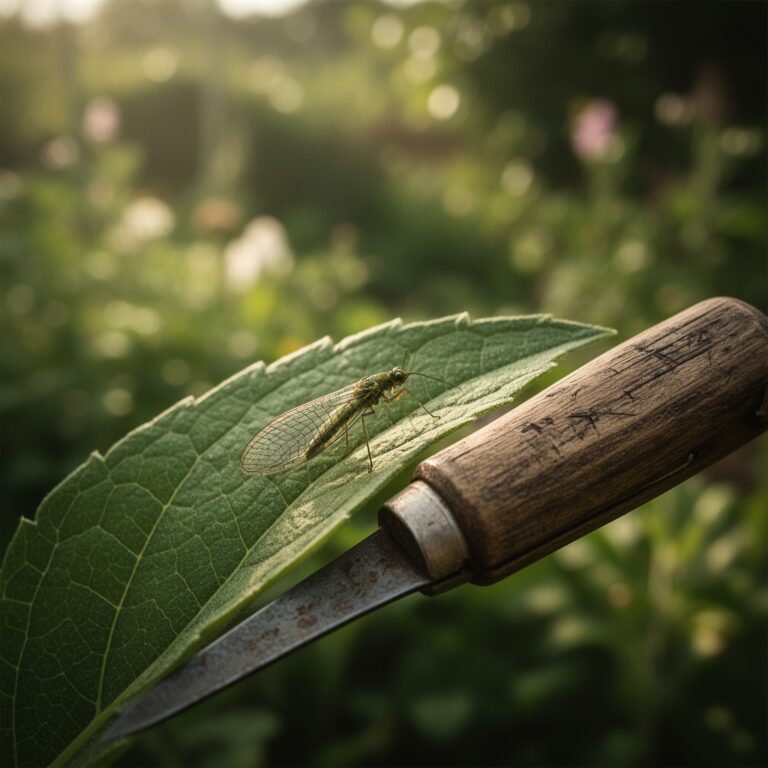
Will neem oil harm beneficial insects? Minimal impact when applied during inactive hours. Ladybugs, lacewings, and parasitic wasps contact dried residue without systemic harm.
Why did my plants wilt after spraying? Application occurred during peak heat or full sun. Spray only when temperatures are below 85°F and direct sunlight is absent.
Does neem oil expire? Cold-pressed formulations retain potency for 12-18 months when stored below 70°F in opaque containers away from UV exposure.