5 Useful Ways How to Use Blue Traps
Blue sticky traps hung at canopy height intercept thrips, leafminers, and fungus gnats before populations explode across greenhouse benches or vegetable rows. Learning how to use blue traps transforms reactive pest management into proactive monitoring, reducing pesticide applications by up to seventy percent in commercial trials. The ultraviolet-reflective coating on these panels mimics flower petals, exploiting the phototactic behavior of hundreds of insect species that navigate by short-wavelength light.
Materials
Select traps with a spectral peak near 450 nanometers for maximum attraction to Western flower thrips (Frankliniella occidentalis). Purchase water-resistant adhesive rated for outdoor use in Zones 3-11. For soil preparation around trap stations, amend beds with a 4-4-4 organic meal (feather meal, bone meal, and kelp) to support host plants without excess nitrogen that encourages soft growth attractive to piercing-sucking pests. Maintain soil pH between 6.2 and 6.8; test cation exchange capacity quarterly to ensure calcium and magnesium levels discourage blossom-end rot in trap-monitored tomato blocks.
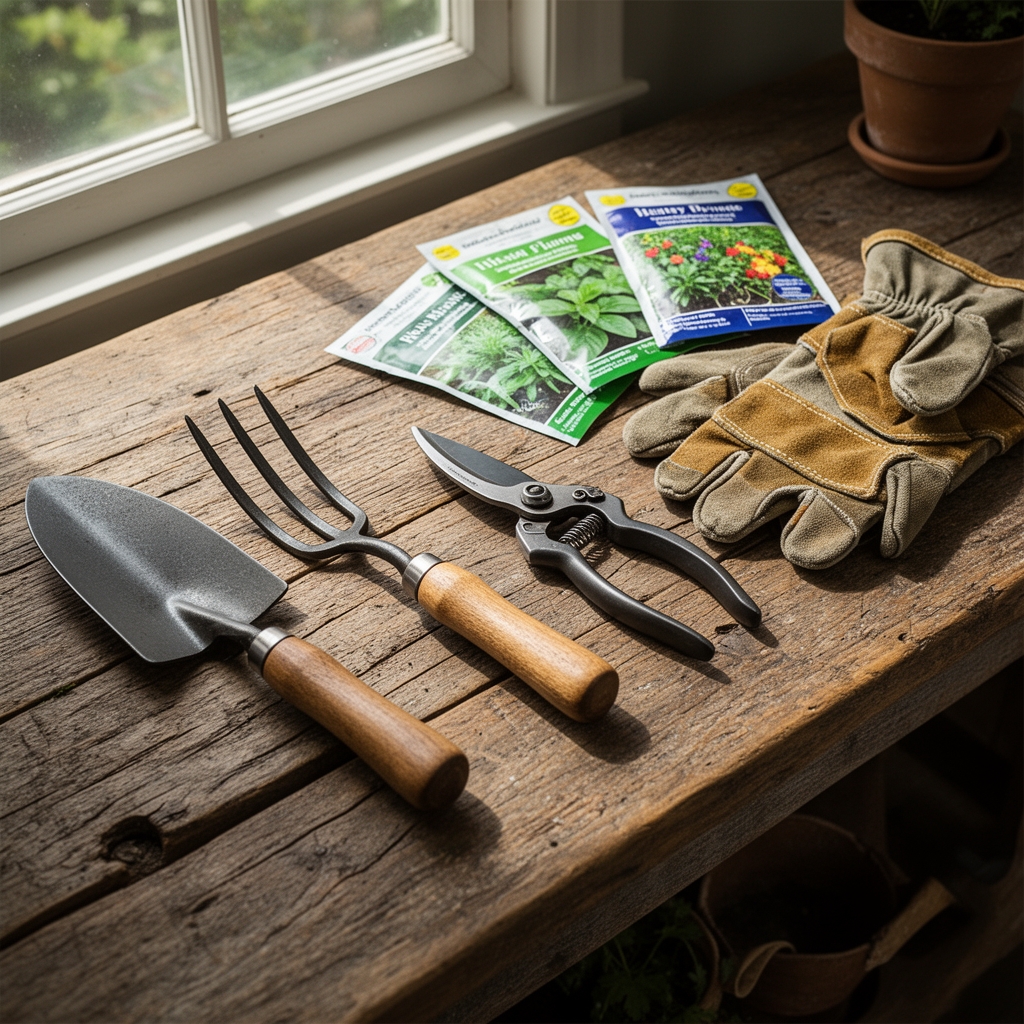
Acquire wooden stakes or aluminum hangers with adjustable clips. Choose traps measuring at least 10 inches by 12 inches for adequate surface area. Budget one trap per 200 square feet of greenhouse space or every 50 linear feet of row crops. Pair traps with a magnifying loupe (10x minimum) for accurate species identification and a field notebook to track weekly counts.
Timing
Deploy blue traps two weeks before the last expected frost date when soil temperatures reach 50°F at four-inch depth. In Zones 8-10, this window opens mid-February; in Zones 5-6, wait until late April. Thrips emerge when cumulative degree-days exceed 300 (base 50°F). Install traps as transplants move into the field to capture immigrant populations before they establish on tender seedlings.
Replace traps every four to six weeks during peak growing season, or immediately when dust coverage reduces adhesive efficacy by more than thirty percent. In high-pollen environments, inspect every ten days. Autumn deployment begins six weeks before first frost to monitor overwintering thrips seeking protected sites in perennial beds.
Phases

Sowing Phase
Position traps at soil level near seed flats to detect shore flies and fungus gnats (Bradysia spp.) emerging from damp germination media. Space units 8 feet apart in a grid pattern. Record baseline counts for three consecutive days before seedlings break the surface. If counts exceed five adults per trap per day, reduce irrigation frequency and top-dress with perlite to dry the upper half-inch of substrate.
Pro-Tip: Inoculate seedling trays with Steinernema feltiae nematodes at 50 million per 1,000 square feet when fungus gnat larvae appear in root zones; blue traps confirm adult suppression within fourteen days.
Transplanting Phase
Elevate traps to transplant canopy height, typically 6 to 10 inches above soil. Secure stakes at a 90-degree angle to prevent shadow interference. Thrips counts above fifteen per trap per week signal economic threshold in peppers and cucurbits; apply spinosad or insecticidal soap within 48 hours. Monitor auxin distribution in transplant stems; thrips feeding disrupts apical dominance and causes lateral branching two nodes below the growing tip.
Pro-Tip: Prune damaged terminals at a 45-degree angle one-quarter inch above the nearest healthy node to redirect auxin flow and restore vertical growth.
Establishing Phase
Raise traps incrementally as plants mature, maintaining them 2 inches below flower clusters. Thrips aggregate on open blooms; traps at this height intercept adults moving between inflorescences. Document cumulative trap counts against fruit set percentages. In tomatoes, twenty thrips per trap correlates with a twelve percent reduction in marketable yield when populations persist for three weeks.
Pro-Tip: Companion-plant alyssum or marigold borders 4 feet from trap lines; these banker plants harbor Orius insidiosus minute pirate bugs that predate thrips nymphs while adults remain attracted to blue panels.
Troubleshooting
Symptom: Trap counts remain near zero despite visible leaf damage.
Solution: Verify trap color temperature with a spectrometer; faded panels lose UV reflectance. Replace immediately and store unused traps in opaque packaging.
Symptom: Non-target captures of honeybees or lacewings exceed pest counts.
Solution: Shift traps 15 degrees away from direct sun exposure during peak foraging hours (10 AM to 2 PM).
Symptom: Trap adhesive fails in high humidity above eighty percent.
Solution: Switch to polymer-based adhesives rated for greenhouse conditions. Apply a thin layer of Tangle-Trap to refresh surfaces mid-season.
Symptom: Thrips counts spike despite biological controls.
Solution: Test leaf tissue nitrogen; concentrations above 4.5 percent dry weight attract thrips. Withhold fertilizer for two weeks and foliar-feed with 0-0-50 potassium sulfate to harden cell walls.
Maintenance
Inspect traps every three to four days during active growth. Wipe panels with isopropyl alcohol and a microfiber cloth if dust accumulation exceeds ten percent surface coverage. Apply 1 inch of water per week to trap-monitored beds, delivered through drip irrigation to minimize foliar wetness that spreads thrips-vectored tospoviruses. Mulch with 3 inches of straw to suppress soil-dwelling life stages.
Rotate trap positions by 6 feet each month to prevent localized population adaptation. Store off-season traps in a cool, dry location below 70°F to preserve adhesive integrity for up to two years.
FAQ
How many traps do commercial growers need per acre?
Install 20 to 25 traps per acre in row crops, 40 to 50 in greenhouse production where microclimates vary.
Can blue traps replace insecticide applications entirely?
Traps serve as monitoring tools and reduce pest pressure by twenty to thirty percent but require integration with cultural controls and biological agents for complete management.
What time of day should I check traps?
Morning inspections between 7 AM and 9 AM capture overnight activity before heat degrades adhesive quality.
Do blue traps work for whiteflies?
Whiteflies prefer yellow traps (550-nanometer peak). Blue traps capture fewer than five percent of whitefly populations.
How do I dispose of used traps?
Seal in plastic bags and discard with regular waste. Do not compost; adhesive residues contaminate finished material.