9 Simple Steps to Apply Corn Gluten
Corn gluten meal emerges from the wet-milling process of corn, a golden powder that carries 10% nitrogen by weight and releases protein chains that halt seed germination. When you master the steps to apply corn gluten, you transform lawn care into precision agriculture. The smell is sweet and grainy, coating your hands with a fine dust that binds to soil particles and begins its work within hours of contact with moisture.
Materials and Nutritional Profile
Corn gluten meal provides a 9-0-0 NPK ratio in most commercial formulations, though some blended products reach 10-1-0. This high-nitrogen organic amendment works best in soils with pH between 6.0 and 7.2. The material itself does not alter soil pH significantly, making it suitable for neutral to slightly acidic lawns.
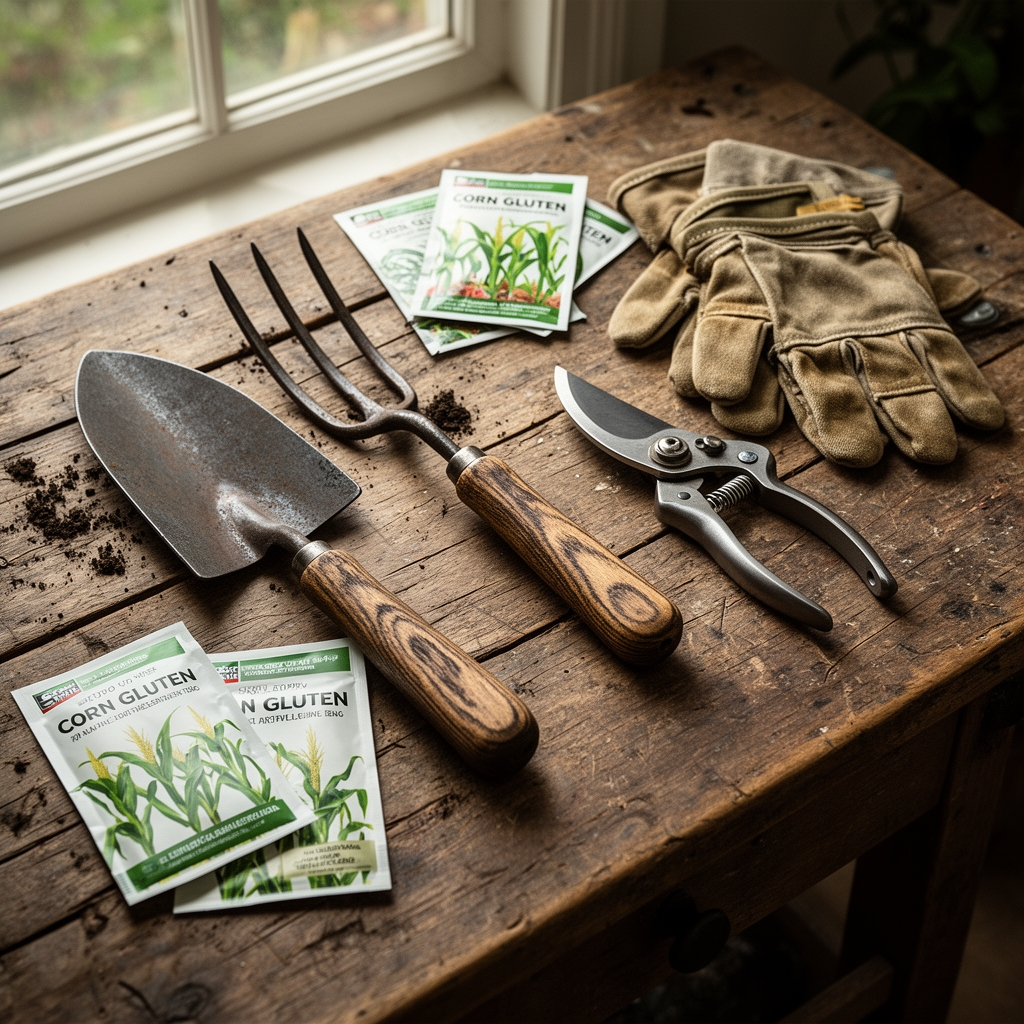
You need a broadcast spreader calibrated to deliver 20 pounds per 1,000 square feet for pre-emergent applications or 10 pounds per 1,000 square feet for fertilization alone. Rotary spreaders provide more uniform distribution than drop spreaders on uneven terrain. A soil test kit measuring cation exchange capacity helps determine if your clay or loam can hold the nitrogen released during decomposition.
Supplementary materials include a garden rake for incorporation, a soil thermometer reading to 3 inches depth, and irrigation equipment capable of delivering 0.25 inches of water. Mycorrhizal fungi inoculant pairs well with corn gluten applications, as the nitrogen boost supports fungal colonization of grass root systems.
Timing and Climate Considerations
The steps to apply corn gluten demand precision tied to soil temperature, not calendar dates. Apply when soil reaches 55°F at 3-inch depth for three consecutive days. This temperature triggers crabgrass germination in Zones 5 through 8.
Zone 5 gardeners apply between late April and mid-May. Zone 6 targets mid-April. Zone 7 moves applications to early April. Zone 8 requires split applications: early March for summer annuals, then September for winter weeds.
Frost-date windows matter less than soil temperature, but final spring frost provides a rough guideline. Apply corn gluten two weeks before your average last frost date. Fall applications occur six weeks before first frost, targeting cool-season weed seeds.
Avoid application within eight weeks of overseeding. The same protein dipeptides that prevent weed germination will kill desirable grass seed.
Application Phases

Initial Distribution Phase
Mow lawn to 2.5 inches before application. Calibrate spreader on pavement, collecting and measuring product over a 100-square-foot test area. Adjust settings until you achieve target rate. Walk at 3 feet per second for consistent coverage.
Apply in perpendicular passes: north-south, then east-west. Overlap wheel tracks by 6 inches. Avoid application on windy days exceeding 10 mph, as the fine particles drift.
Pro-Tip: Apply to dry grass but damp soil. Morning dew on blades causes clumping, while bone-dry soil prevents immediate protein activation.
Incorporation Phase
Rake lightly if applying to bare soil patches, working material into the top 0.5 inches. On established turf, skip raking. The granules settle into the thatch layer naturally.
Water within 24 hours with 0.25 inches measured in rain gauges or tuna cans. This activates protein dipeptides without washing away the product. The moisture triggers hydrolysis, releasing pentapeptides that inhibit root formation in germinating seeds.
Pro-Tip: Use a soil penetrometer to verify moisture reached 2-inch depth. Shallow watering wastes application.
Establishment Phase
Monitor for emergence prevention over the next 21 days. Existing plants absorb nitrogen through roots, showing darker green color within 10 days. The pre-emergent effect lasts 4 to 6 weeks depending on rainfall and microbial activity.
Auxin distribution improves in treated grass, promoting lateral shoot growth. Measure this by counting tillers in a 4-inch-square section before treatment, then again at day 30.
Pro-Tip: Pair with compost tea application at day 14 to boost soil bacteria that mineralize corn gluten protein into plant-available nitrate.
Troubleshooting Common Issues
Symptom: Patchy weed breakthrough in specific zones.
Solution: Check spreader overlap pattern. Gaps wider than 6 inches allow germination. Recalibrate and reapply at half-rate to gaps only.
Symptom: Grass yellowing three weeks post-application.
Solution: Excess nitrogen volatilization in sandy soils with low cation exchange capacity. Water deeply to 6 inches to move nitrogen into root zone. Add sulfur-coated urea for slow release next season.
Symptom: Thick mat of ungerminated weed seeds visible on surface.
Solution: Seeds germinated before application but died at emergence. This is success. Rake and compost dead seedlings.
Symptom: No greening effect observed.
Solution: Soil pH below 5.5 or above 8.0 inhibits nitrogen uptake. Test and amend with lime or sulfur as needed.
Symptom: Clumping in spreader hopper.
Solution: Product absorbed moisture. Store in containers with desiccant packs. Sift through hardware cloth before loading.
Maintenance Schedule
Apply 20 pounds per 1,000 square feet in early spring, then 10 pounds per 1,000 square feet in early fall for northern grasses. Southern lawns tolerate 15 pounds per application.
Water with 1 inch weekly during active growth. Measure with rain gauges, not timers. Soil type determines frequency: sandy soils need twice-weekly irrigation, clay soils weekly.
Mow at 3 inches after application. Taller blades shade soil, extending pre-emergent effectiveness. Sharpen mower blades to 30-degree angle to prevent tearing that wastes nitrogen through wound sites.
Reapply every 5 to 6 weeks during weed germination season for continuous protection. Maximum safe application totals 60 pounds per 1,000 square feet annually.
Frequently Asked Questions
Does corn gluten work on existing weeds?
No. It prevents germination only. The protein dipeptides inhibit root development in emerging seedlings but do not affect established plants.
Can I use corn gluten in vegetable gardens?
Yes, but only around transplants, never with direct-seeded crops. Apply 3 inches from transplant stems at 5 pounds per 100 square feet.
How long until I see results?
Fertilizer greening appears in 7 to 10 days. Pre-emergent success becomes visible as absence of weeds over 4 weeks.
Is corn gluten safe for pets?
Completely. Animals may eat it without harm. It is processed food-grade corn protein.
What is the shelf life?
Three years in sealed, moisture-proof containers. Humidity destroys effectiveness within six months in paper bags.