9 Vital Steps to Mix Insecticidal Soap
Aphids cluster on new rose shoots, their soft bodies glistening in morning light. Spider mites weave fine webs across bean leaves while whiteflies cloud around tomato plants. The steps to mix insecticidal soap begin with understanding that these pests share a critical vulnerability: their protective cuticle dissolves when fatty acid chains disrupt cellular membranes, causing desiccation within hours of contact.
Materials

Source pure castile soap with no additives, fragrances, or synthetic detergents. Dr. Bronner's unscented liquid soap at 18% potassium oleate concentration serves as the gold standard. Conventional dish detergents contain surfactants that damage plant cuticles and disrupt auxin distribution.
Distilled or rainwater maintains a neutral pH between 6.5 and 7.0. Municipal water often carries chlorine, chloramine, and dissolved minerals that reduce efficacy. Test water pH with litmus strips before mixing. Hard water above 300 ppm dissolved solids creates soap scum that clogs stomata.
A spray bottle with adjustable nozzle rated for fine mist application ensures uniform coverage. Commercial pump sprayers with pressure relief valves work for large operations. Add 1 tablespoon of vegetable oil per gallon to improve adherence without suffocating beneficial insects.
Horticultural pH meters calibrated to two decimal places verify solution chemistry. Target a final pH of 7.0 to 8.0. Solutions below 6.5 may damage tender foliage while alkaline mixtures above 8.5 lose potassium soap solubility.
Timing
Apply insecticidal soap when temperatures range between 60°F and 75°F. Heat above 85°F accelerates evaporation, leaving concentrated fatty acid residues that burn leaf margins. Morning application between 6 AM and 9 AM allows four hours of drying time before peak sun exposure.
Zone 7 gardeners spray from April 15 through October 1, avoiding the last frost date window and first freeze predictions. Zone 5 operations compress the treatment season to May 20 through September 10. Southern zones 9 and 10 require year-round monitoring but avoid spraying during July and August when heat stress peaks.
Check weather forecasts for 48-hour rain-free windows. Precipitation within six hours of application washes away the solution before fatty acids penetrate pest cuticles. Wind speeds above 8 mph cause drift and uneven coverage.
Phases

Initial Mixing
Measure 2 tablespoons of pure castile soap per quart of distilled water. Pour water into a clean spray bottle first, then add soap to prevent excessive foaming. Invert the container three times to blend without creating bubbles. Test a small area on one leaf 24 hours before full application.
Pro-Tip: Add 1/8 teaspoon of blackstrap molasses per quart to provide trace minerals and improve leaf adhesion through increased solution viscosity.
Application Protocol
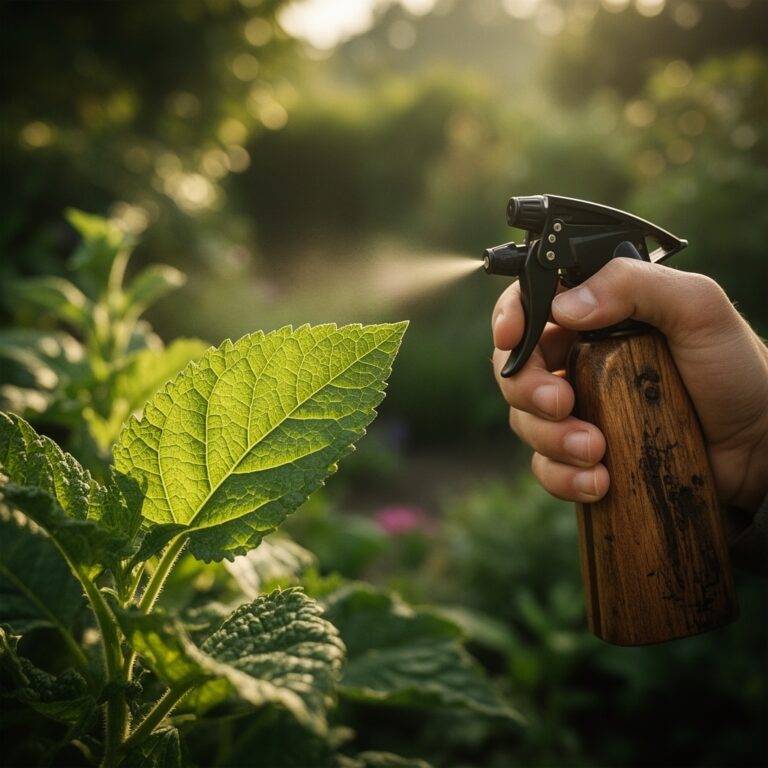
Target leaf undersides where soft-bodied insects congregate near vascular tissue. Hold the nozzle 6 inches from foliage and apply until droplets form but do not drip. Coat stems, petioles, and growth tips where aphids feed on phloem-rich sap.
Work systematically from top to bottom, covering all plant surfaces within a 15-minute window to maintain solution temperature and viscosity. Spray early-instar nymphs during their first three molts when cuticle development remains incomplete.
Pro-Tip: Add mycorrhizal fungi inoculum to soil three days before spraying to strengthen plant stress response through improved phosphorus uptake and enhanced cation exchange capacity.
Post-Treatment Monitoring
Examine treated plants after four hours. Dead insects appear shriveled with darkened body segments. Living pests continue feeding and moving across leaves. Reapply every five to seven days for three consecutive treatments to break reproductive cycles.
Pro-Tip: Prune heavily infested growth at a 45-degree angle 1/4 inch above outward-facing nodes to redirect auxin flow toward healthy tissue and reduce pest reservoirs.
Troubleshooting
Symptom: White residue on leaf surfaces
Solution: Reduce soap concentration to 1 tablespoon per quart. Switch to softer water below 150 ppm total dissolved solids. Rinse foliage with clean water 12 hours after application.
Symptom: Leaf margins turn brown or crispy
Solution: Dilute mixture by 50%. Apply only in early morning when stomata remain partially closed. Avoid spraying new growth with underdeveloped cuticle layers.
Symptom: Pests return within three days
Solution: Increase coverage to leaf undersides. Check for ant colonies farming aphids and treat with boric acid barriers. Inspect neighboring plants serving as pest reservoirs.
Symptom: Beneficial insects die after treatment
Solution: Spray only affected plants, leaving 30% of garden untreated as refuge habitat. Time applications when honeybees return to hives after 7 PM. Avoid flowers entirely.
Maintenance
Spray every seven days during active infestations. Reduce to every 14 days for preventive maintenance during peak pest seasons. Store mixed solution for no more than one week in opaque containers away from direct sunlight.
Water plants with 1 inch of irrigation 12 hours before application to reduce osmotic stress. Well-hydrated tissue tolerates fatty acid contact better than drought-stressed foliage.
Rotate insecticidal soap with neem oil and pyrethrin every three weeks to prevent resistance development in pest populations. Monitor leaf surfaces with a 10x hand lens weekly.
FAQ
How long does insecticidal soap remain effective?
The solution works on contact only. Dried residue provides no ongoing protection. Reapply after rain or overhead irrigation.
Can I use insecticidal soap on all plants?
Avoid hairy-leaved species like African violets and fuzzy-leaved herbs. Test ferns, succulents, and seedlings on single leaves first.
What concentration kills spider mites?
Use 5 tablespoons per gallon for mite infestations. Their smaller size requires higher fatty acid concentrations.
Does soap harm soil microbiomes?
Foliar applications do not affect rhizosphere bacteria or fungal networks when used as directed.
How does this compare to synthetic insecticides?
Insecticidal soap leaves no residual toxicity and breaks down within 24 hours. It requires more frequent application but poses minimal risk to soil food webs.