8 Secrets for How to Care for Indoor Plants
The scent of damp, well-aerated humus and the firm turgor of a waxy leaf indicate a plant in peak physiological health. Achieving this state requires moving beyond casual observation to a rigorous, data-driven methodology. Understanding how to care for indoor plants necessitates a mastery of the micro-environment; you must regulate gas exchange, light intensity, and mineral availability within a closed system. Success is measured by cellular integrity and consistent metabolic output rather than mere survival.
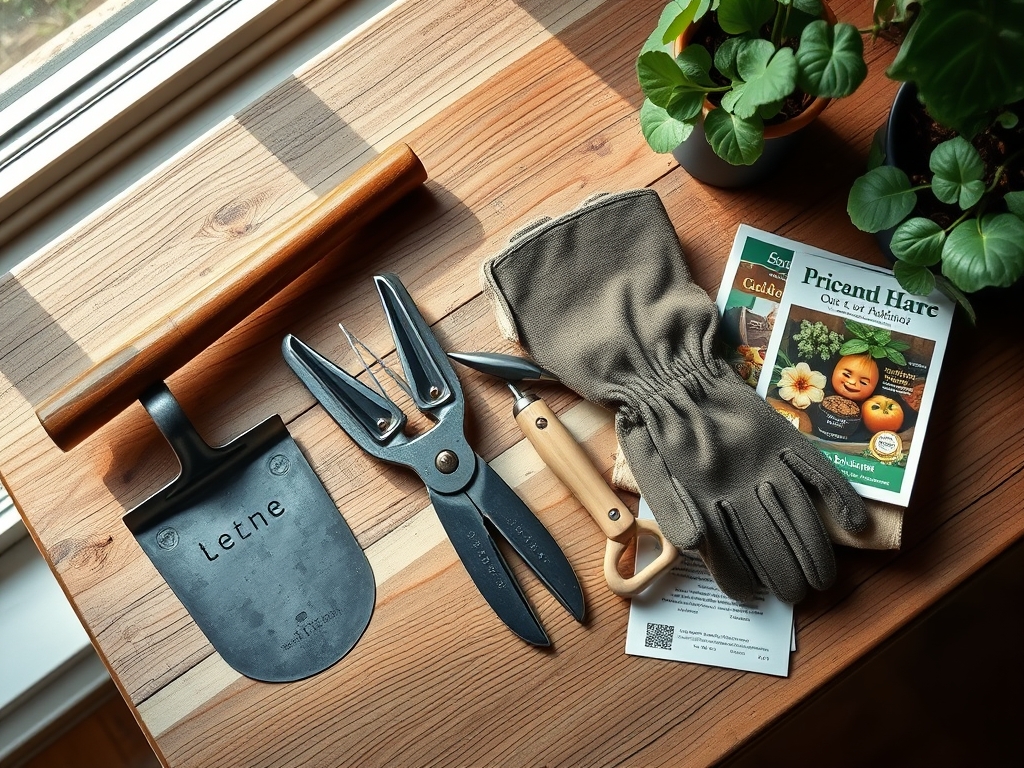
Materials:
The foundation of indoor cultivation is the substrate. A friable loam with high porosity is essential to prevent anaerobic conditions in the rhizosphere. For most tropical indoor species, maintain a soil pH between 5.8 and 6.5 to ensure maximum nutrient bioavailability.
Nutrient management requires specific NPK (Nitrogen-Phosphorus-Potassium) ratios tailored to growth stages. During the vegetative phase, utilize a 3-1-2 ratio to support chlorophyll production and leaf expansion. For flowering species, transition to a 1-3-2 ratio to provide the phosphorus necessary for reproductive development. The substrate must have a high Cation Exchange Capacity (CEC) to retain positively charged ions like Calcium (Ca2+) and Magnesium (Mg2+), preventing leaching during irrigation cycles.
Timing:
Indoor environments are shielded from the external variables of USDA Hardiness Zones, yet plants still respond to seasonal shifts in photoperiod and ambient humidity. The biological clock of an indoor plant is governed by circadian rhythms that dictate the transition from active vegetative growth to dormancy or senescence.
In the Northern Hemisphere, growth slows significantly from November through February as light intensity drops below the LCP (Light Compensation Point). During this window, metabolic rates decrease, requiring a 40 percent reduction in irrigation and a total suspension of fertilization. Aim to repot or propagate only when the plant enters its active spring phase, typically when indoor temperatures consistently hold at 68 to 75 degrees Fahrenheit.
Phases:
Sowing and Germination
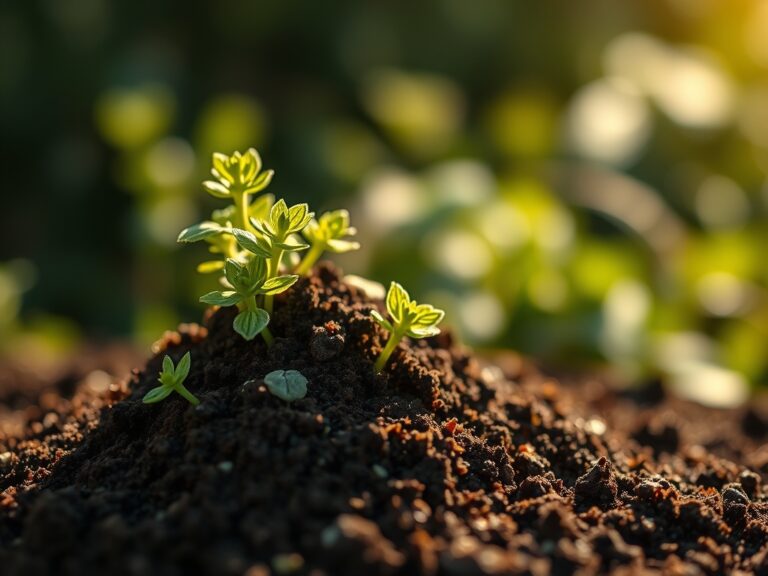
Successful germination requires a constant media temperature of 70 to 75 degrees Fahrenheit. Use a sterile, peat-based starting mix to minimize fungal pathogens. Maintain 100 percent relative humidity using a humidity dome until the first true leaves emerge.
Pro-Tip: Monitor for phototropism immediately upon emergence. Seedlings will elongate their hypocotyls toward the strongest light source; rotate the tray 180 degrees daily to ensure structural symmetry and prevent lodging.
Transplanting
Move specimens to larger containers when roots begin to circle the interior perimeter of the current vessel. This prevents the plant from becoming "root-bound," a state that inhibits water uptake and gas exchange. Ensure the new container is only 2 inches wider in diameter than the previous one to avoid "perched water tables" where excess soil remains saturated and leads to root decay.
Pro-Tip: Introduce mycorrhizal fungi to the root ball during transplanting. This symbiotic relationship extends the reach of the root system, increasing the surface area for phosphorus absorption and improving drought resistance.
Establishing and Acclimation
When bringing a new plant into a controlled environment, it must undergo a 14-day acclimation period. Gradually increase light exposure over two weeks to prevent solarization or leaf scorch. Maintain high humidity during this phase to support turgor pressure while the root system adjusts to the new substrate.
Pro-Tip: Avoid pruning during the first 30 days of establishment. This allows the plant to maintain high levels of auxin, a hormone produced in the apical meristem that signals the roots to grow and stabilize the plant in its new medium.
The Clinic:
Physiological disorders often manifest as visual cues on the foliage. Identifying these early is critical for plant salvage.
Symptom: Interveinal Chlorosis
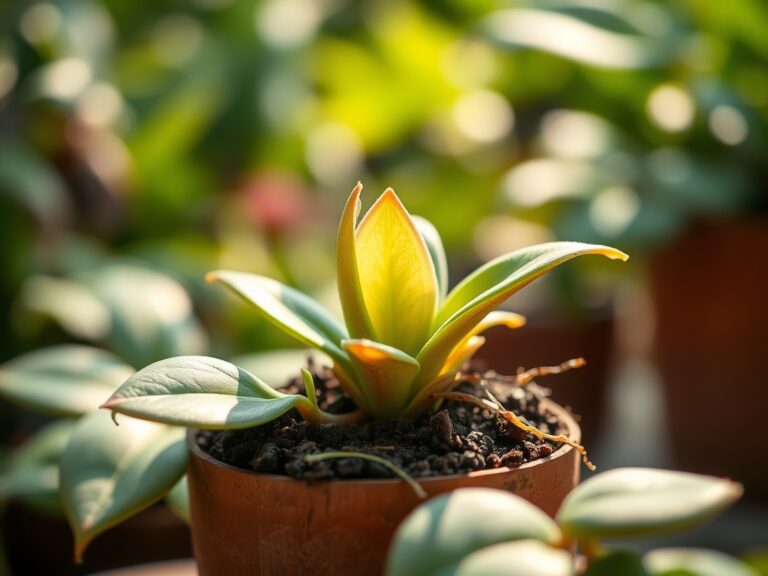
- Analysis: Yellowing between the veins of young leaves while veins remain green.
- Solution: This indicates an Iron (Fe) deficiency, often caused by a pH level above 7.0. Lower the pH using a sulfur-based acidifier to unlock iron ions.
Symptom: Leaf Tip Burn
- Analysis: Necrosis at the distal ends of the foliage.
- Solution: This usually results from salt accumulation from synthetic fertilizers or tap water minerals. Flush the substrate with distilled water equal to three times the volume of the pot.
Symptom: Epinasty (Downward Curving)
- Analysis: Leaves curling downward and appearing heavy.
- Solution: This is a sign of overwatering or poor soil aeration. Increase oxygen to the rhizosphere by adding perlite or orchid bark to the mix.
Fix-It: Nitrogen Deficiency
If the oldest leaves turn entirely yellow (general chlorosis), the plant is scavenging nitrogen to support new growth. Apply a water-soluble fertilizer with a high N-value (e.g., 10-5-5) at half strength to restore nitrogen levels.
Maintenance:
Precision maintenance prevents the "stress-recovery" cycle that stunts indoor specimens. Use a soil moisture meter to verify that the top 2 inches of substrate are dry before adding water. For most tropicals, deliver water until it exits the drainage holes, ensuring the entire root column is hydrated.
Employ bypass pruners for clean cuts; ragged edges create entry points for pathogens. When removing dead tissue, cut at a 45-degree angle just above a node to encourage lateral branching. For thick-stemmed varieties, a hori-hori knife is useful for dividing root masses or removing stubborn offsets. Maintain an ambient humidity of 50 to 60 percent using an ultrasonic humidifier to prevent excessive transpiration.
The Yield:
For those growing indoor herbs or edible greens, harvest timing is a function of essential oil concentration. Harvest leafy greens in the early morning when turgor pressure is highest. Use sharp shears to remove no more than 30 percent of the canopy at one time to avoid shocking the plant into senescence.
Post-harvest, submerge the cut ends in 40-degree Fahrenheit water immediately. This rapid cooling slows the metabolic rate and preserves the cellular structure. For flowering indoor plants, remove spent blooms (deadheading) to redirect energy from seed production back into vegetative vigor and future bud development.
FAQ:
How often should I water my indoor plants?
Watering frequency depends on evaporation rates and substrate volume. Use a soil moisture meter to check the root zone. Most plants require irrigation when the top 25 to 50 percent of the soil feels dry to the touch.
What is the best light for indoor plants?
Most indoor plants thrive in bright, indirect light measuring between 1,000 and 2,500 foot-candles. Use a light meter to ensure the intensity meets the specific species' requirements; south-facing windows provide the highest intensity in the Northern Hemisphere.
Why are my plant leaves turning yellow?
Yellowing, or chlorosis, is typically caused by overwatering, which leads to root hypoxia. It can also signify a Nitrogen deficiency or improper soil pH. Check the root health and soil moisture levels first before adjusting nutrient loads.
Do indoor plants need fertilizer in winter?
No. During the low-light months of winter, plants enter a dormant or semi-dormant state. Their metabolic demand for minerals drops significantly. Fertilizing during this period can lead to toxic salt buildup in the substrate and root burn.